Source Galvanized G Ring for Lifting, Packaging, and Construction
Find 30 galvanized g ring options from Chinese manufacturers with varying diameters, gauges, and surface finishes. Compare specifications like shank diameter, point type, and packing details to select the right fastener for lifting chains, webbing slings, or general packaging needs.
Key considerations
Products List




Comprehensive Sourcing Guide
Galvanized G Ring Sourcing Guide
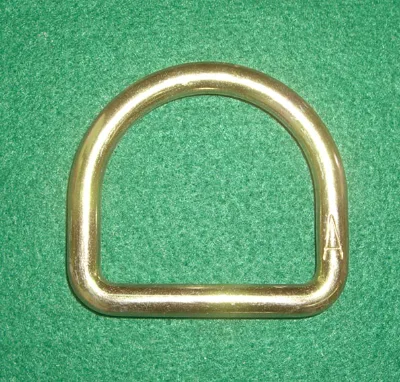
When sourcing galvanized G rings, buyers must navigate a market that often conflates distinct hardware categories under similar naming conventions. The supplied product data reveals a diverse inventory ranging from forged D rings and hog rings to various nail types, indicating that "G ring" may be used loosely in some listings to describe general lifting or fastening hardware. It is critical for procurement teams to distinguish between true G-ring shackles used in rigging and other galvanized steel components like U-type nails or forged D rings, as their structural integrity and load-bearing capacities differ significantly. Misidentification can lead to catastrophic failures in lifting applications, making precise specification verification the first step in any sourcing engagement.
The observed product landscape includes items with varying surface treatments, such as bright, electro-galvanized (EG), hot-dip galvanized (HDG), and Galfan finishes. While the core keyword specifies "galvanized," the presence of these multiple finishing options suggests that not all listed "G rings" or similar hardware will meet the corrosion resistance requirements of harsh environments. Buyers should treat the term "galvanized" as a variable attribute rather than a guaranteed standard. Understanding the specific galvanization method required for the intended application—whether it be indoor storage, outdoor construction, or marine-adjacent lifting—is essential before evaluating supplier quotes or technical datasheets.
Product Scope and Observed Listing Signals
The current market listings for galvanized hardware exhibit a wide variance in material composition and intended use. Data indicates the presence of products made from carbon steel and alloy steel, with some items explicitly identified as forged D rings or hog rings. This diversity suggests that suppliers often bundle multiple hardware categories under single product pages. Procurement specialists must carefully parse product titles and descriptions to ensure they are evaluating actual G-ring shackles rather than incidental items like 15-gauge nails or 16-gauge U-type fasteners. The presence of "Forged D Ring" and "Hog Ring" in the attribute list highlights the need for strict keyword filtering to isolate relevant lifting hardware.
Observed listing signals also reveal significant variation in packaging and unit quantities, which can impact logistics planning. Some items are packed in cartons of 10,000 pieces, while others use customer-specific packaging or palletized configurations. For instance, one observed packing format involves 10 boxes per carton and 80 cartons per pallet, whereas another lists 1,000 pieces per carton. These discrepancies in packing standards can influence the total landed cost and storage requirements. Buyers should verify if the supplier can accommodate specific packaging needs to prevent damage during transit and to streamline warehouse receiving processes.
Technical Specifications to Verify
Dimensional accuracy is paramount when sourcing galvanized G rings, particularly for lifting applications where fitment with chains and slings is critical. The supplied data shows a wide range of shank diameters, including 1.8mm, 1.60mm, and 1.6mm, alongside various outside diameters such as 3/4 inch and open/closed diameters for other hardware types. For a true G ring, the shank diameter and body width must match the corresponding chain link size precisely. Buyers should request detailed dimensional drawings that specify the shank diameter, body width, and throat opening to ensure compatibility with existing rigging equipment. Relying on generic size descriptions without verifying exact millimeter or inch measurements can result in improper fitment and reduced safety factors.
Surface finishing and material grade are equally critical technical parameters. The data lists surface treatments including bright, EG, HDG, and Galfan, as well as materials like carbon steel and alloy steel. The choice of galvanization method directly affects corrosion resistance and durability. Hot-dip galvanizing typically provides a thicker zinc coating compared to electro-galvanizing, making it more suitable for outdoor or corrosive environments. Additionally, the material grade determines the tensile strength and yield point of the ring. Buyers must confirm whether the product is made from standard carbon steel or a higher-grade alloy steel, and verify the specific galvanization process to ensure it meets the environmental exposure requirements of the project.
Compliance and Safety Documentation
Safety certification is non-negotiable for lifting hardware, as failure can result in severe injury or property damage. The observed product data includes references to CE, ISO, SGS, and BV certificates, which are relevant for verifying compliance with international quality and safety standards. However, buyers must distinguish between general company certifications and product-specific test reports. A CE mark on a lifting component implies conformity with European safety directives, but it must be backed by rigorous testing data. Procurement teams should request specific test certificates for each batch of G rings, including proof of load testing and material composition analysis, rather than relying solely on general supplier accreditation.
The Working Load Limit (WLL) is a critical safety parameter that must be clearly documented and verified. The supplied data indicates a WLL range of 1.12t to 20t, which suggests that the supplier offers products across various capacity classes. Buyers must ensure that the specific G ring ordered is rated for the intended load and that the WLL is permanently marked on the hardware. This marking is essential for field safety inspections and regulatory compliance. Additionally, buyers should verify that the product complies with relevant industry standards, such as ISO 4878 for shackles or EN 1677-3 for lifting accessories, depending on the destination market and application requirements.
Cost Drivers and Commercial Terms
Pricing for galvanized G rings is influenced by several factors, including raw material costs, galvanization thickness, and order volume. The observed price range of $0.06 to $50 USD reflects the diversity of products listed, from small fasteners to larger lifting hardware. For genuine G rings, the cost will be driven primarily by the weight of the steel, the grade of the alloy, and the surface treatment process. Hot-dip galvanizing is more expensive than electro-galvanizing due to the higher zinc consumption and energy costs. Buyers should request detailed cost breakdowns to understand how material and finishing costs contribute to the final price, allowing for more accurate budgeting and comparison.
Commercial terms and payment methods also play a significant role in the total cost of ownership. The data indicates flexible payment terms, including Western Union, T/T, and L/C, as well as trade terms like FOB, CFR, and CIF. The Minimum Order Quantity (MOQ) varies, with some items having an MOQ of just 1 piece, while others may require larger volumes. For large-scale procurement, negotiating volume discounts and favorable Incoterms can significantly reduce costs. Buyers should also consider the impact of packaging on shipping costs, as inefficient packing can lead to higher freight charges. Clear communication regarding packaging standards and shipping terms is essential to avoid unexpected expenses.
Supplier Qualification and Quality Control
Supplier qualification requires a thorough assessment of manufacturing capabilities and quality management systems. The observed data indicates that products originate from China, with specific mentions of Tianjin as a production hub. Buyers should verify the supplier's manufacturing facilities, including their forging, heat treatment, and galvanizing processes. A reputable supplier should have in-house quality control labs capable of performing tensile tests, hardness tests, and zinc coating thickness measurements. Requesting a factory audit or third-party inspection report can provide valuable insights into the supplier's ability to maintain consistent quality and meet production deadlines.
Quality control procedures should be clearly defined and agreed upon before placing orders. Buyers should specify acceptance criteria for dimensional tolerances, surface finish quality, and marking clarity. The presence of OEM availability suggests that suppliers can customize products, but this requires strict oversight to ensure that custom specifications are met. Implementing a pre-shipment inspection protocol can help identify defects early and prevent the receipt of non-conforming goods. Buyers should also establish a clear process for handling non-conformities, including return policies and corrective action requirements, to mitigate risks associated with defective hardware.
Long-Term Procurement Checks
Long-term procurement success depends on establishing a robust supplier relationship and continuous performance monitoring. Buyers should conduct regular supplier reviews to assess adherence to quality standards, delivery reliability, and responsiveness to issues. The observed data shows a variety of product models and standards, indicating that suppliers may have diverse capabilities. Maintaining open communication channels and providing feedback on product performance can help suppliers improve their offerings and align with buyer expectations. Regular audits and performance scorecards can help identify areas for improvement and ensure that the supplier remains a reliable partner.
As market conditions and regulatory requirements evolve, buyers must stay informed about changes in standards and best practices. The observed data includes references to GB and ISO standards, which may be updated over time. Buyers should ensure that their suppliers are aware of and comply with the latest version of relevant standards. Additionally, monitoring market trends for raw material prices and galvanization technologies can help buyers anticipate cost fluctuations and identify opportunities for innovation. By maintaining a proactive approach to supplier management and market analysis, buyers can secure a stable supply of high-quality galvanized G rings for their operations.
FAQs
What materials are used for galvanized g rings?
Galvanized g rings are typically manufactured from carbon steel or alloy steel. These materials provide the necessary strength for lifting applications while the surface treatment ensures corrosion resistance for long-term durability in various environments.
Which certifications do these products hold?
The products commonly hold CE, ISO, SGS, and BV certifications. These documents verify that the manufacturing processes and final products meet international safety and quality standards required for industrial lifting and rigging applications.
Can I request custom packaging for orders?
Yes, OEM and custom packaging options are available for buyers. Suppliers often offer carton and pallet configurations or customer-specific packages to meet logistical needs and protect the products during international shipping.
What is the minimum order quantity for these items?
The minimum order quantity can be as low as one piece for some suppliers. However, standard bulk packaging often involves quantities like 10,000 pieces per carton, so buyers should confirm specific MOQs with the vendor.
How are the products shipped from the factory?
Products are shipped from China, specifically from locations like Tianjin, using standard trade terms like FOB, CFR, or CIF. Payment terms typically include Western Union, T/T, or L/C to facilitate secure international transactions.
What surface treatments are applied to the steel?
Surface treatments include bright, electro-galvanized, hot-dip galvanized, Galfan, or plastic spraying. These processes enhance the corrosion resistance of the carbon steel or alloy steel base material for different environmental conditions.